Technology
Presidio
1. Understand How Shopify Scripts and Shopify Functions Differ
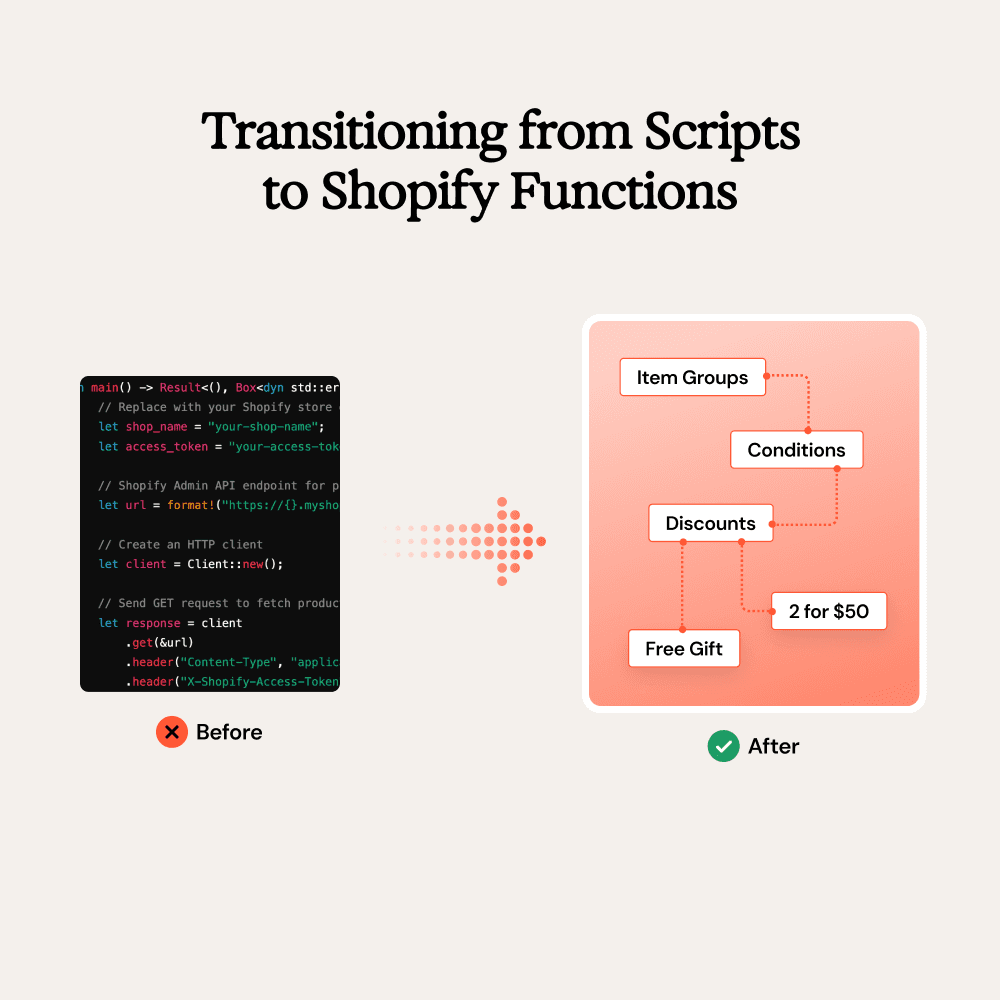
Shopify Scripts have long been used by Shopify Plus brands to customize parts of the checkout experience, including discounts, shipping logic, and other store-specific rules.
Shopify Functions introduce a more flexible and scalable way to handle that same type of logic. Built to run on Shopify’s infrastructure, they allow brands to extend checkout behavior, support more advanced discount functionality, and manage custom logic in a way that is easier to maintain over time.
This shift matters because Shopify Functions are better suited to modern ecommerce needs. They are designed to scale more effectively as stores grow, and they offer stronger performance and reliability than older Scripts-based approaches.
2. Assess Your Current Shopify Scripts
Before moving to Shopify Functions, it’s important to review the Shopify Scripts currently running on your store. That means identifying which scripts are active, what each one is responsible for, and how they affect checkout behavior, discounts, shipping logic, and the wider customer experience.
Start by building a clear inventory of every active script. From there, review how each script affects store performance and day-to-day operations, then look for dependencies or integrations that could influence the transition.
Understanding the role each script plays makes it much easier to decide how that functionality should be recreated, improved, or replaced using Shopify Functions.
3. Plan the Move From Scripts to Functions Carefully
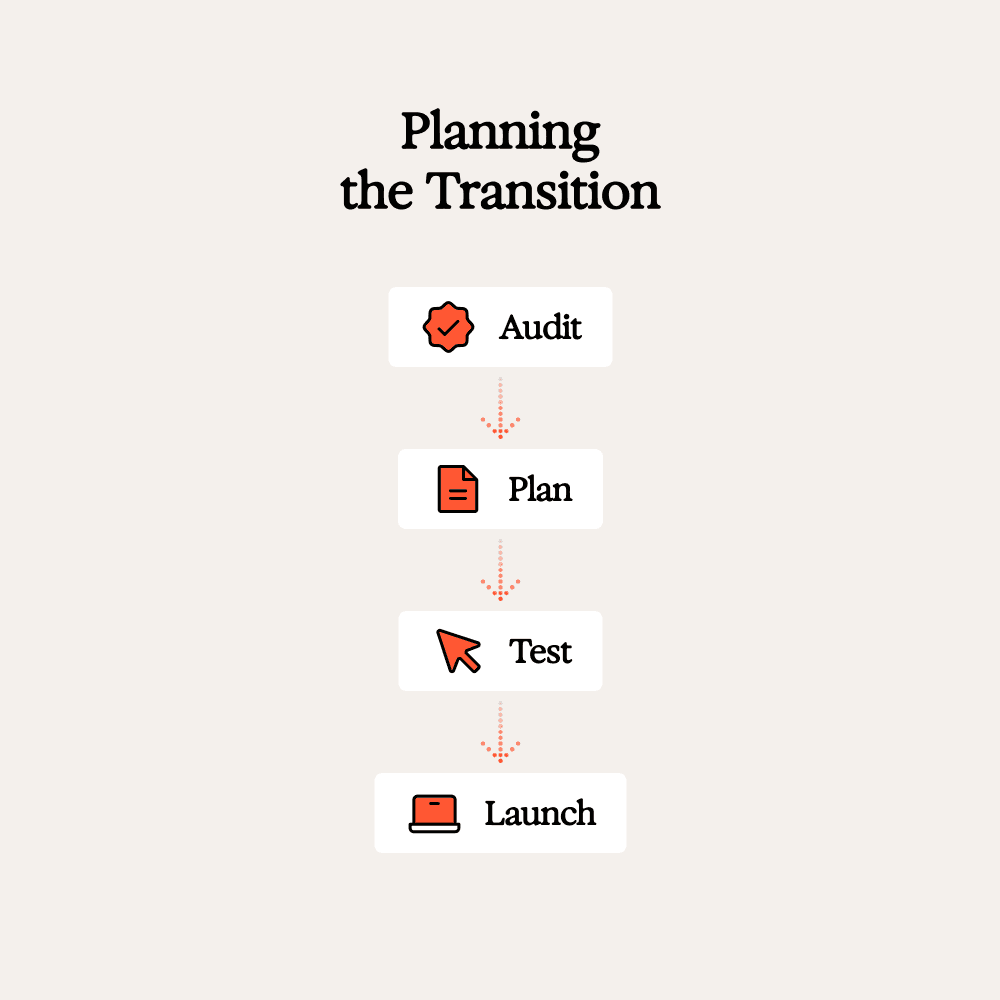
Moving from Shopify Scripts to Shopify Functions requires more than a quick technical swap. To reduce risk, brands need a clear transition plan that covers migration strategy, staging, and thorough testing before anything goes live.
That usually starts with a step-by-step plan for converting existing Scripts into Shopify Functions, followed by a development or staging environment where the new logic can be tested safely. From there, rigorous testing is essential to confirm that checkout behavior, discounts, shipping logic, and any related functionality all work as expected in the new setup.
A well-planned transition helps minimize disruption and makes it easier to catch issues before they affect the live store.
4. Use Shopify Functions to Unlock New Capabilities
Shopify Functions give brands access to more flexible functionality than older Scripts-based setups. Instead of simply recreating what already exists, this transition is a chance to improve how your store handles checkout logic, discounts, and deeper customization.
That can include more advanced checkout behavior, discount logic that better reflects your commercial strategy, and stronger integration possibilities through Shopify’s expanding functions framework and APIs.
For many stores, the real opportunity is not just replacing Shopify Scripts, but using Shopify Functions to build a more scalable and adaptable ecommerce experience.
5. Prepare for Ongoing Shopify Functions Maintenance
Moving from Shopify Scripts to Shopify Functions is not a one-off project. Once the transition is complete, ongoing maintenance is still needed to keep functionality stable and aligned with Shopify’s evolving platform.
That means monitoring how your Shopify Functions perform over time, reviewing updates and new capabilities as they are released, and making adjustments when store requirements change. It also helps to have access to the right technical support when troubleshooting issues or refining more complex logic.
By treating Shopify Functions as an evolving part of your ecommerce stack rather than a finished task, brands can maintain performance, protect compatibility, and keep improving the customer experience over time.
Moving from Shopify Scripts to Shopify Functions gives brands a stronger foundation for scalability, performance, and flexibility. With the right planning, testing, and ongoing support, the transition becomes more than a technical update. It becomes an opportunity to build a more capable Shopify experience for the long term.
Technology