Presidio News
Presidio
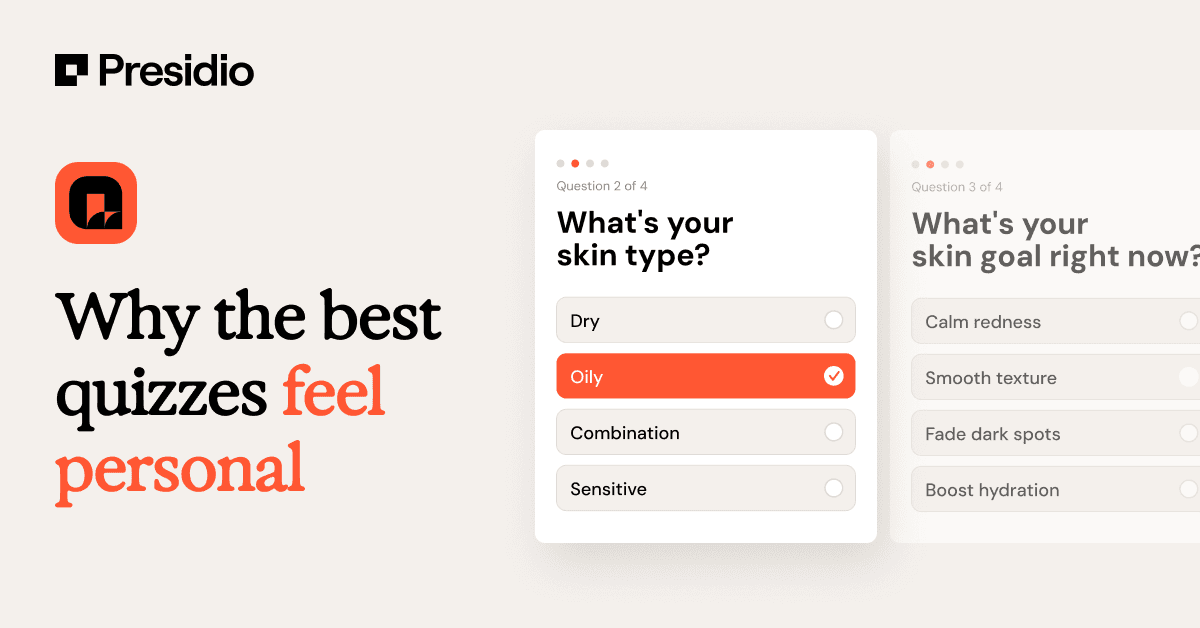
All quizzes ask customers questions, but high-performing quizzes do something different: they make customers feel understood.
We reviewed high and low-converting quizzes across our platform to understand what separated the strongest performers from the rest. The highest-converting quizzes we reviewed saw conversion rates ranging from 22-39%, while lower-performing quizzes often converted under 5%.
While conversion rates naturally vary across different businesses and customer journeys, one pattern stood out: the biggest differences weren’t flashy designs or complicated quiz flows. They were the small moments that made customers feel like the recommendation was created specifically for them.
Great quizzes start with the customer's problem, not their demographics
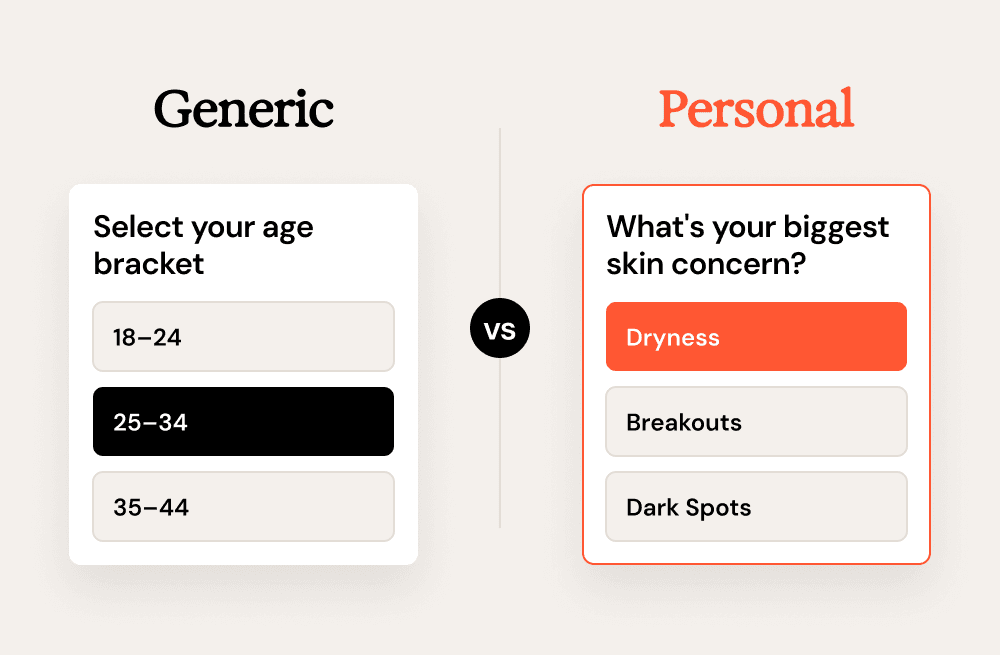
Imagine you're shopping for skincare and so you take a product match quiz. Which question feels like it understands you better?
"Select your age bracket"
Or:
"What's your biggest skin concern right now? Select all that apply"
One collects broad information, and the other feels personal to you. Customers rarely think in terms of demographics; they think about the nuanced problem they're trying to solve:
My skin is dry and dull.
It's prone to redness and irritation.
I need something lightweight.
I have sun damage.
When a quiz focuses on those goals, customers naturally feel like the recommendations will be more relevant to them.
It's the same reason people are turning to AI assistants over generic Google searches: a tailored answer that accounts for your specific situation beats a generic one every time. Great quizzes work the same way. They don't just categorize customers, they help them feel understood.
The recommendation matters, but the explanation matters just as much
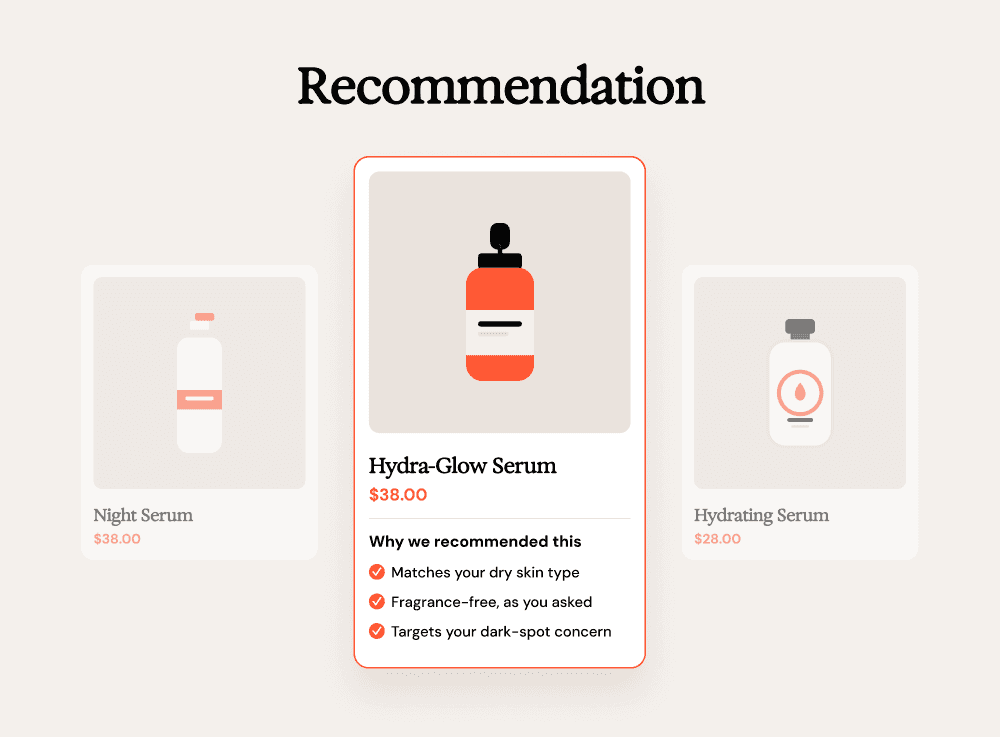
Getting a recommendation isn't enough if it feels generic and lacking information. Customers also want to know: Why was this recommended for me?
A simple explanation connecting the recommendation back to their answers turns the result from a product suggestion into a personalized recommendation, and becomes the moment customers feel either seen or glossed over.
Instead of "Here's your moisturizer," try "Based on your answers, we chose this moisturizer because it's lightweight, fragrance-free, and designed for sensitive skin."
That small amount of context builds confidence that the quiz actually understood the customer.
The best recommendations guide customers without taking away choice
There's a balance to strike with the number of product recommendations.
If your quiz recommends one product, customers may wonder, "Why this one?" or "What if I wanted to compare it to a couple of others?" But if you recommend fifteen, they may wonder, "Did the quiz actually learn anything about me?"
A recurring pattern we noticed was that the highest-converting quizzes we reviewed typically recommended between 2 and 6 products. The strongest quizzes offered a curated selection: enough options for customers to compare confidently without feeling limited, but not so many that the experience felt generic or overwhelming.
The goal isn't to eliminate choice, it's to make choosing feel easier.
Your results page is where trust is won or lost
By the time someone reaches their results, they've already invested time into answering your questions. They've trusted your quiz to understand what they're looking for. Maybe they’ve even entered their contact information to get to the result page.
Our review showed that reaching the results page alone isn't enough. Some quizzes achieved high completion rates but still converted fewer than 5% of shoppers into purchases.
The results page is where that expectation is either fulfilled or broken. Relevant recommendations, helpful product descriptions, and clear explanations all reinforce one simple message: We listened, and we understood your situation.
Keep the conversation going
One pattern we also noticed was that many successful quizzes included email capture.
While this review can't tell us whether email capture directly improves conversion, it does create an opportunity to continue the relationship after the quiz ends through follow-up recommendations, educational content, and personalized marketing.
The takeaway
Customers don't want to feel like they've completed a questionnaire. They want to feel like their answers were used to understand their needs and guide them toward the right products.
The quizzes that stood out weren't necessarily the most complex. They were the ones that built trust by showing customers that their answers mattered from the first question through to the final recommendation. High completion rates alone didn't guarantee purchases.
When customers feel understood and confident in the recommendation they receive, a quiz becomes more than a questionnaire. It becomes a tool that helps them make decisions.


Presidio News