Outrank AI

The most popular advice about the fastest Shopify themes is to pick the demo with the best lab score and move on. That advice fails on live stores. The theme that ships lightest can become the slowest once apps, tracking scripts, and oversized media sit on top of it.
A theme still sets the ceiling. It controls page structure, JavaScript behavior, image presentation, and layout stability. Promotional sections, review widgets, subscription flows, and marketing pixels decide whether mobile shoppers get a fast page.
This list skips a single ranking. Each theme is judged by the kind of store it keeps fast for, what it already includes, and the trade-offs that show up after launch. You'll see free Shopify foundations, one premium merchandising theme, and our own collection.
If the catalog is simple, a minimal theme wins. If you need storytelling or quick buy, a slightly richer theme can stay faster than a bare one stuffed with extra apps.
Table of Contents
1. Presidio Shopify Themes

Speed here is a maintainability choice. For brands that want three distinct storefront foundations instead of one generic starter, Presidio Shopify Themes is the option I recommend first. The collection pairs Broadcast, Palo Alto, and Modular. Broadcast is feature rich and built to incentivize sales. Palo Alto leans on strong design and deeper features. Modular uses a lively layout with elegant animations so the catalog feels energetic without turning the homepage into a slideshow.
Over 20,000 stores have been built on one of Presidio's themes, and that base is meant to stay maintainable. A ready foundation cuts the effort of a full custom build, and you can still tailor sections to the brand. When the catalog, markets, or checkout logic outgrow those sections, move to custom Shopify theme development rather than stacking one-off apps.
What these themes stay fast for
They stay fast for product-led DTC brands that need style and conversion sections without assembling every block from scratch. They're a weaker fit if you need a blank canvas or a niche layout these three don't cover.
Customization is normal. Match the sections you turn on to the templates shoppers use. Leave the rest off. A reviews embed, a personalization script, or a second animation layer on top of Modular is usually what spends the speed you bought with the theme.
Across listed themes, median results were 97.8% for LCP, 96.3% for CLS, 97.3% for INP, and 91.5% passing all three, with an all-CWV range of 33.1% to 98.0%, according to Shopify's theme performance data. Oversized hero media can push a polished theme toward the bottom of that range even when the code starts lean.
Practical rule: Turn on only the sections a shopper needs on that template, then retest mobile field data before the next app embed.
The upside is three premium directions from a studio that also builds apps and keeps optimizing. If Modular's motion or Palo Alto's density fights the brand, extra scripts will spend the speed you wanted.
2. Dawn
Dawn is the free, minimalist theme Shopify maintains, and it's where I start when a store should be product-first and visually quiet. Dawn includes quick buy, recommendations, filtering, swatches, and a sticky header without a paid license.
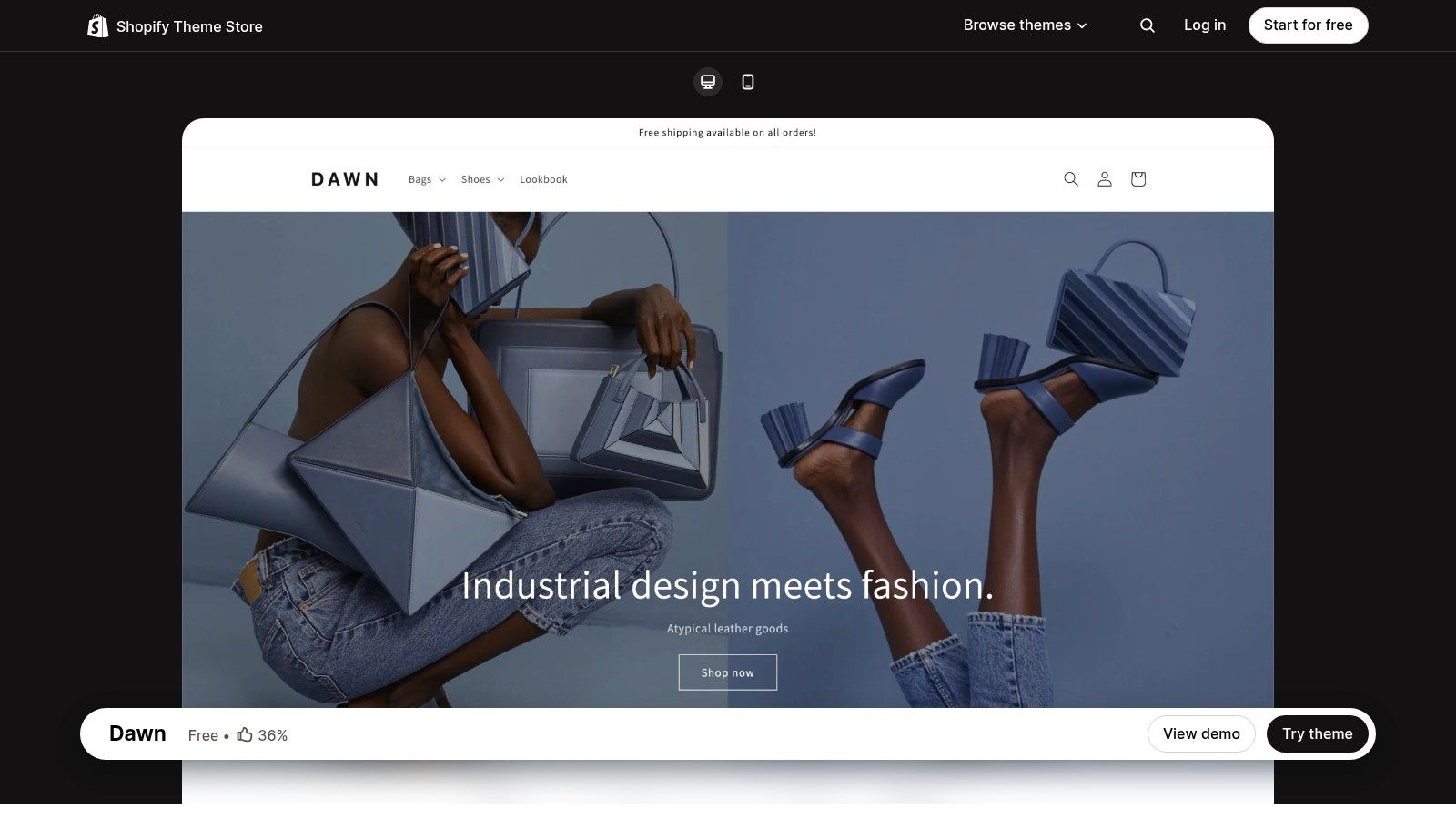
Large product imagery and simple layouts are the design bet. You customize in the theme editor, and Shopify keeps the theme updated, which matters more for long-term speed than a one-time score. It has ranked well in controlled lab comparisons, but your catalog, apps, and custom Liquid decide the live result.
Google's bar is the one shoppers feel. A good experience at the 75th percentile means LCP no more than 2.5 seconds, INP below 200 milliseconds, and CLS no more than 0.1, as Google's Core Web Vitals documentation defines it. Dawn can meet that on a lean mobile product page. It misses it when every collection loads uncompressed photography plus several marketing tags.
Best for: Small to mid catalogs that don't need heavy editorial sections.
Watch out: Minimal styling often gets "fixed" with apps, which is how a fast theme slows down.
Speed habit: Compress hero images and keep one recommendation tool, not two. Our guide on how to optimize website speed walks through that cleanup.
Theme Store reviews are mixed, including requests for more layout and search control. If you need a distinctive look on day one, budget design time or pick a theme with a stronger point of view. Dawn's advantage is how little it forces you to load.
3. Sense
Beauty, wellness, and other benefit-led brands often outgrow a blank product grid. Sense is the free theme I look at when the product page has to carry descriptions, video, testimonials, and FAQs without a separate storytelling app.
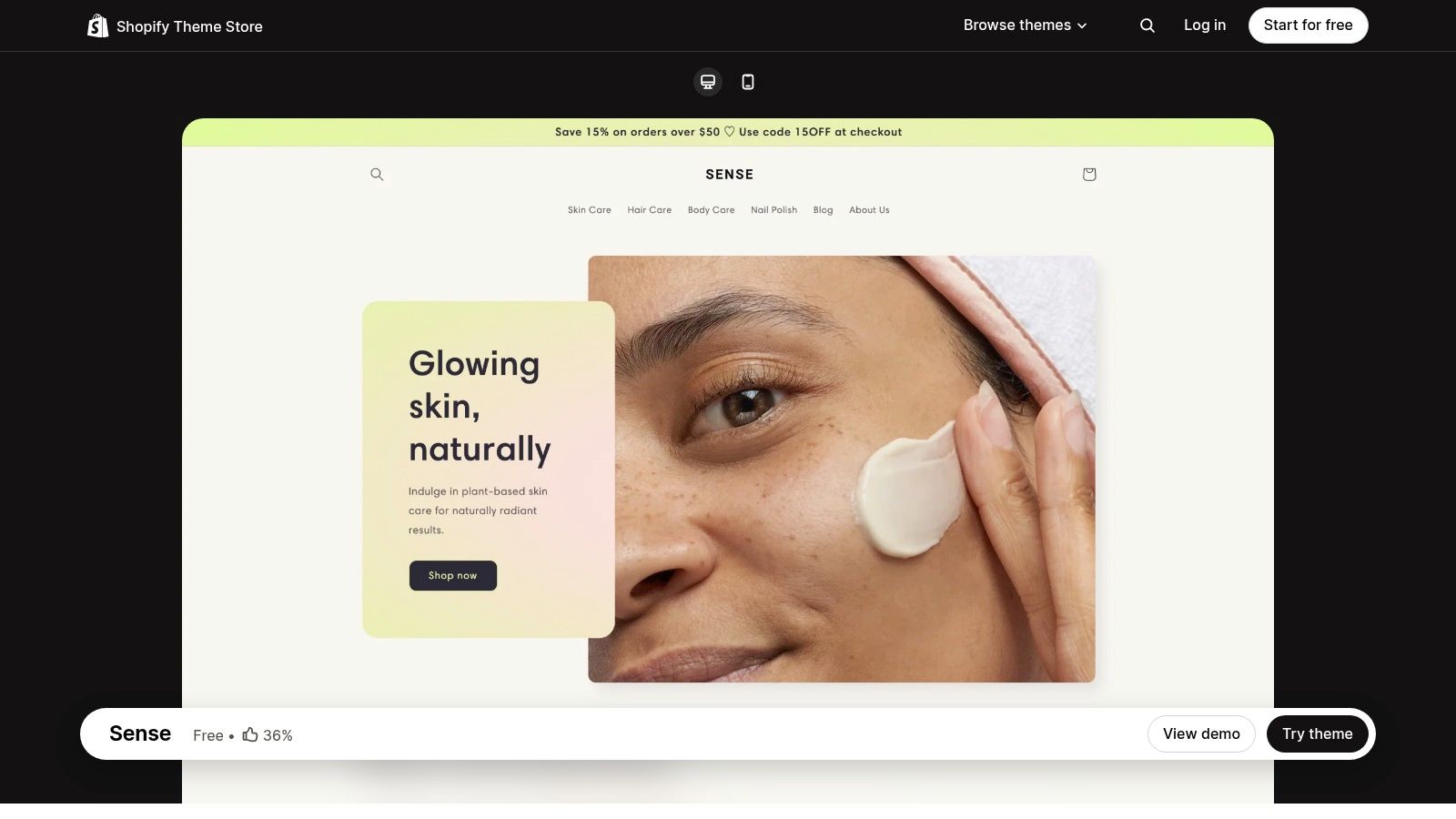
It ships with enhanced search, filters, recommended products, and a mega menu, plus a bright palette and soft gradients you can edit in the theme editor. Those built-in pieces can replace an FAQ app and a basic recommendation app. That's the speed case, not the demo gradient.
Independent analysis found mobile Core Web Vitals pass rates from 43.8% to 97.2% among Shopify themes, a spread of more than 50 points in the same ecosystem, per Uxify's theme performance review. Sense can land anywhere in a gap like that. A lab test has placed it just behind Dawn among free themes, and that gap disappears once you add a quiz, a popup, and uncompressed before-and-after photos.
A light theme plus three apps is usually heavier than a slightly richer theme that already has the sections you need.
Theme Store reviews include complaints about settings and mobile behavior, so click through filters and variant changes on a phone before you commit. If the look is too soft for the brand, restyle colors before you install a page builder. Builders are where Sense stores lose the speed they started with.
4. Craft
Artisan and premium brands often need space and type more than they need another app. Craft is free, editorial, and built around generous spacing, brand narrative sections, and lookbook-style merchandising.

You get galleries, zoom, video, search, filters, swatches, and quick buy, adjusted in the theme editor. A controlled comparison has put it among the faster free themes. I treat that as a hint, not a guarantee. Editorial layouts fail in production when every story block uses a full-width, uncompressed image.
Shopify's testing can be broken down by device category, page type, and region, which is the check I want on an editorial theme, as Shopify's ecommerce performance guidance describes. A homepage lookbook and a product page won't fail the same way. Quizzes, bundles, and extra markets need their own pass.
Keep it fast for: Lookbooks and story pages with a tight image budget.
Don't expect: Pixel-level control over every image and text block. Reviewers already flag those limits.
Skip: A second gallery app on top of the built-in one.
If the editorial tone is wrong for a utility catalog, forcing Craft into a dense grid usually means custom CSS and extra sections. At that point Dawn, or a premium theme, is the more maintainable path.
5. Ride
Sports and active-lifestyle catalogs want bold type, dark backgrounds, and asymmetric layouts more than they want a blank theme. Ride is free and already pointed that way.

Layouts cover products, teams, and brand content. Discovery tools include quick buy, collection navigation, search, filtering, and a mega menu. Media covers galleries, video, lookbooks, swatches, and size charts, all edited in the theme editor. A store-based benchmark has listed Ride among stronger performers. Customized stores aren't guaranteed the same result, especially when size-chart popups and video heroes stack on a collection template.
Platform context keeps that claim honest. HTTP Archive data in the 2025 Web Almanac, covered by Shopify's website performance analysis, reports that 76% of Shopify sites passed all three Core Web Vitals on both mobile and desktop. That's an ecosystem reference, not a promise for Ride after team pages and event pixels land.
Theme Store feedback is mixed, including requests for help with some interactions. Test add-to-cart, filters, and the menu on a mid-range phone. Ride is less of a blank canvas than Dawn. If the brand is understated, fighting the dark sports styling with overrides usually costs more speed than switching themes.
6. Taste
Specialty products with a short catalog often need high contrast and blunt typography so the product explanation does the selling. Taste is the free theme for that job.

Spacious layouts, specialty-product highlights, and FAQ sections come built in, along with quick buy, recommendations, search, and filtering. Styling stays in the theme editor. An independent benchmark has placed it among the better-performing free themes. Configuration still decides the outcome. High-contrast photography exported at hero size will blow the layout budget faster than the theme's CSS will.
I wouldn't pick Taste to imitate a soft beauty brand. The industrial look is the point, and sanding it off with custom fonts and extra sections removes the reason it stays light. Reviewers mention missing controls or purchase-flow elements in some setups. If you need a custom bundle builder or a complex variant matrix, plan development instead of three new apps. Features built into the theme stay faster than a widget on every template.
For a focused catalog, Taste is an intentional presentation without a premium license. A wide catalog with constant promotions will outgrow the styling options and start paying for that in maintenance.
7. Impact
A catalog with bundles, quantity breaks, and cross-sells gets slow when each of those jobs is a separate app. Impact, from Maestrooo, is the premium theme on this list for that store: dense merchandising in one theme, not a pile of widgets.

Quick buy, a sticky cart, sticky add-to-cart, product tabs, galleries, swatches, and complementary-product recommendations ship with the theme. On Shopify Plus, quantity pricing and combined listings are included too. Configured lightly, a premium theme like this can stay fast. Turn on every animation, or leave both sticky purchase bars plus a promo bar running, and the same theme stops being lean.
Theme Store reviews are strong overall, and merchants often highlight responsive support. You pay more than you would for Dawn or Sense. I would pay that only when native sections replace the apps a free theme would need. A simple product page does not need the license.
Start from a preset, then delete sections the journey does not use. One sticky purchase element is enough. If those sections still fall short, compare premium Shopify templates with a custom build before you stack apps. For a plain catalog, stay on a free theme and put the budget into image discipline.
Fastest Shopify Themes at a Glance
A single lab score does not tell you which theme stays fast. Apps, scripts, and media do. Match the theme to the catalog and the merchandising you need, then leave the rest off.
Theme | Cost | Best for | Built-in merchandising features |
|---|---|---|---|
Presidio Shopify Themes | Premium; see the theme pages for current pricing | Brands seeking a polished, customizable storefront foundation | Broadcast: feature rich and built to incentivize sales. Palo Alto: strong design and deeper features. Modular: lively layout with elegant animations |
Dawn | Free | Stores wanting a minimalist, adaptable starting point | Quick buy, product recommendations, filtering, swatches, sticky header |
Sense | Free | Beauty, wellness, and product-led brands focused on explaining benefits | Product videos, testimonials, FAQs, enhanced search, filters, recommendations, mega menu |
Craft | Free | Artisan or premium brands focused on storytelling | Product galleries, zoom, videos, lookbooks, search, filters, swatches, quick buy |
Ride | Free | Sports and active-lifestyle brands | Quick buy, collection navigation, search, filtering, mega menu, galleries, lookbooks, swatches, size charts |
Taste | Free | Specialty products and focused catalogs | Product highlights, FAQs, quick buy, recommendations, search, filtering |
Impact | Premium | Brands seeking extensive merchandising and conversion tools | Quick buy, sticky cart and add-to-cart, product tabs, galleries, swatches, complementary products, quantity pricing and combined listings on Shopify Plus |
Free themes stay lean when the built-in set covers the journey. Premium themes earn their cost when those sections replace extra apps. Turn on every animation, embed, and promo bar, and the same file slows down.
Keeping Your Theme Fast After Launch
Pick the theme for the catalog and the story, then protect it. A product-first store can live on Dawn. A benefit-led brand may be better on Sense. Editorial brands fit Craft, sports brands fit Ride, and short, high-contrast catalogs fit Taste. Stores that would otherwise install a pile of merchandising apps should look at Impact or a maintained premium set. The wrong aesthetic, patched with apps, is slower than the right theme with fewer add-ons.
An HTTP Archive-based analysis put good mobile results for detected Shopify origins at 86% for LCP, 90% for INP, and 92% for CLS, compared with 35% of WooCommerce origins passing all three Core Web Vitals on mobile, according to Branvas's ecommerce speed benchmarks. Those figures describe origins, not your theme file. They show the platform can be fast, and that implementation still moves the result.
App budget: One tool per job. Reviews, subscriptions, and loyalty are enough. A second popup is usually the regression.
Images: Size heroes for mobile, reserve dimensions, and don't autoplay video on collection grids.
Checks: Compare mobile field data on home, collection, product, cart, and one landing page after each major embed.
Maintenance: Install theme updates and delete unused sections. A visually minimal theme loses its edge under app sprawl.
Maintainability is what keeps any of these fastest Shopify themes fast past launch month. If field data keeps missing after you've cut scripts and media, you need implementation help, not another demo. We speed up Shopify stores with tighter code, efficient image handling, and simpler navigation, and we run that work as a focused sprint when a redesign isn't the problem.
Presidio builds and supports Shopify and Shopify Plus storefronts, themes, and apps, with performance tuning aimed at lean setups that stay fast after launch. If the theme is right but the live store isn't, we can tighten scripts, media, and theme code without burying the brand in extra apps. Visit Presidio to plan a speed check or a maintainable theme foundation.